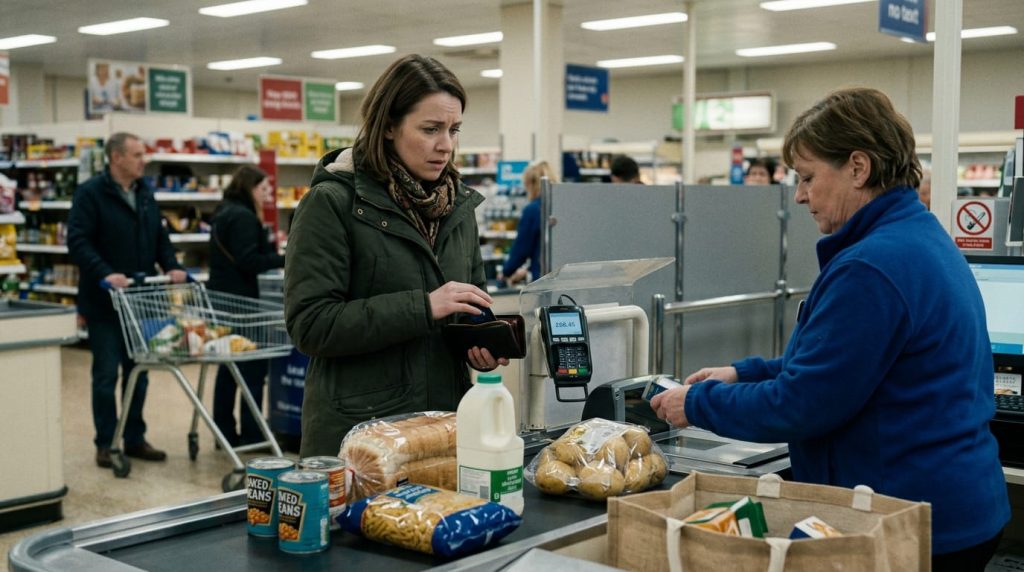
Why is everything still so expensive UK? It’s a question many people are asking as headlines suggest inflation is falling, yet daily life feels no easier. From supermarket prices to energy bills, the cost of living remains stubbornly high. The answer lies in how inflation actually works.
Falling inflation does not mean prices are going down, it means they are rising more slowly. The sharp increases of recent years have already reset the baseline, and those higher costs are now built into everyday life. Understanding this helps explain why households across the UK continue to feel financial pressure despite more optimistic economic reports.
Contents
If inflation is falling, why does life still feel so expensive?
Scroll through the financial headlines, and you could be forgiven for feeling confused. Inflation is cooling. The Bank of England is cautiously optimistic. Economists are talking about a return to normality. And yet, standing in a supermarket aisle or opening an energy bill, millions of British households feel anything but normal. The cost of living in the UK still feels punishing.
That disconnect isn’t psychological, it’s structural. It is baked into how inflation actually works, and understanding it explains why prices are still high and why the crisis in living standards is far from over.
The Illusion Explained
Inflation measures the rate at which prices rise, not the level of prices themselves. When we say inflation is falling, we mean prices are increasing more slowly than before, not that they are going back down. This is the crucial distinction often lost in the gap between economic reporting and lived experience.
The numbers make this plain. According to the Office for National Statistics, UK CPI inflation stood at 3.0% in both January and February 2026, down sharply from the 11.1% peak recorded in October 2022, the highest in four decades. But that earlier surge did enormous damage. Between 2021 and 2023, UK consumer prices rose by over 20%.
A loaf of bread, a tank of petrol, a weekly food shop—all are substantially more expensive than they were four years ago. A lower inflation rate today does not undo that.
Think of it simply: if a pint of milk rose from £1.00 to £1.20 during the crisis years, and inflation is now running at 3%, that milk will cost around £1.24 this year, not £1.00. The price level has permanently shifted upward; only the speed of the ascent has slowed.
Why Prices Rarely Come Back Down
Price deflation, where goods actually become cheaper, is rare in modern economies. Businesses face what economists call “sticky costs”: once rents, wages, and energy contracts reset at higher levels, they cannot easily reverse.
A café owner who renegotiated a lease at post-crisis rates cannot reduce the price of a flat white just because wholesale coffee costs have eased. The new cost structure is now permanent.
Supply chains reinforce this effect. Pandemic disruption and the energy shock following Russia’s invasion of Ukraine forced companies to rebuild at higher baseline costs. Those costs are now embedded across logistics, food, and manufacturing.
And once consumers accept a new normal—a £3.50 sandwich or a £70 weekly shop—prices rarely fall. The market has adjusted.
Energy shows this clearly. Even as wholesale prices stabilise, the earlier surge has already fed through into food, transport, and production. KPMG has warned that renewed energy pressures could push inflation higher again, while growth remains weak.
Hidden Inflation
Headline inflation figures only tell part of the story. Much of the real pressure comes from changes that don’t show up clearly in official data.
Shrinkflation, reducing product size while keeping prices the same, has become widespread. A bag of crisps shrinks. A multipack loses an item. The price stays; the value falls.
Then there is qualityflation. Ingredients decline. Services are stripped back. Charges quietly appear where none existed before.
From broadband fees to delivery charges to subscription increases, the result is the same: purchasing power erodes in ways that aren’t always captured in CPI, but are felt daily. Services inflation, still elevated, reflects how deeply these pressures are embedded.
Wages and the Real Cost of Living
The common reassurance is that wages will catch up. On paper, there has been some progress.
Average earnings have risen, and the National Living Wage increased to £12.21 per hour. But the recovery is shallow.
In real terms, wage growth remains weak. After adjusting for inflation, gains are marginal. Meanwhile, the sharp decline in real wages between 2021 and 2023 created a gap that small increases cannot quickly repair.
A household that lost 10% in real income does not feel relief from a 0.4% gain the following year.
Why This Feels Worse Than Before
Part of the pressure is psychological, but it is grounded in reality.
People remember what things used to cost. They anchor to those prices. When everything resets higher at once, food, energy, and rent, it creates a sense of permanent loss.
At the same time, financial buffers have been eroded. Savings built during stable years were spent during the crisis. What remains is less resilience.
So even stability feels like a strain. Prices are no longer rising rapidly, but they are still high—and households are less equipped to cope.
What It Means for Everyday Life
The Joseph Rowntree Foundation has been clear: prices remain elevated, earnings are weak, and many households are still under pressure.
Housing adds further strain. Rent and mortgage costs often rise faster than inflation, hitting those with the least flexibility hardest.
This is why the economy’s experience feels disconnected from the headlines. Stability is not the same as recovery.
Conclusion
Falling inflation is good news—but it does not mean life is getting cheaper.
It means the climb is slowing, not that we are coming back down. Prices have shifted upward, and they are staying there.
The real question is not what inflation charts say, but whether people can afford their lives. By that measure, the cost-of-living crisis has not ended. It has simply become quieter and more persistent.
And for millions, it remains impossible to ignore at the checkout.
Leave a Reply