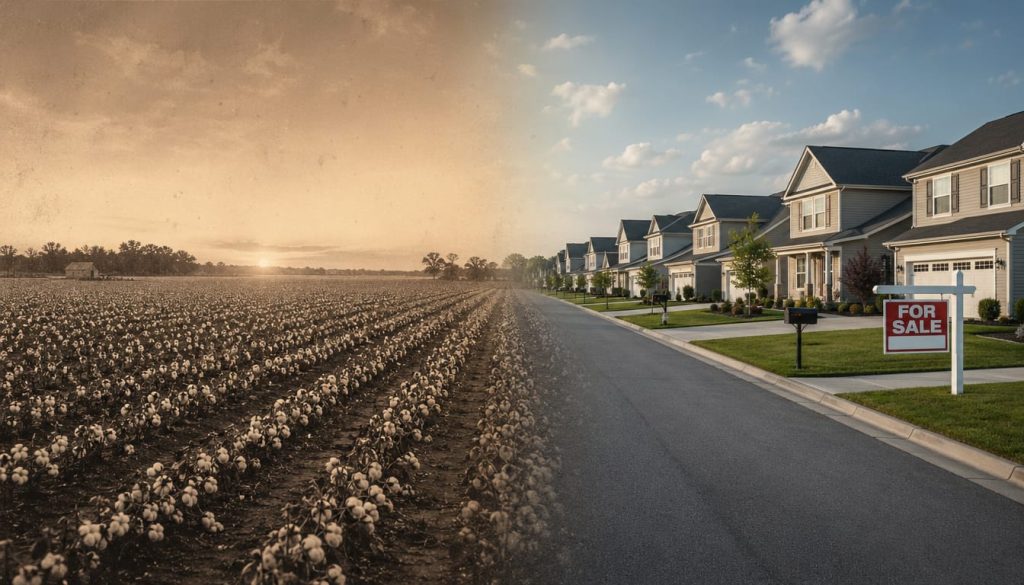
The racial wealth gap slavery legacy remains one of the most persistent and misunderstood features of modern American inequality.
It is not simply a reflection of income differences or individual choices, but the result of centuries of structured exclusion from wealth-building opportunities.
From slavery to redlining and discriminatory federal policies, Black Americans were systematically denied access to assets that generate long-term security.
These historical barriers did not disappear, they compounded over generations. Understanding the racial wealth gap slavery legacy requires examining how past policies shaped present outcomes, and why closing this gap demands more than short-term solutions or surface-level reforms.
Contents
The Long Shadow of Slavery
How America’s Original Sin Shapes Inequality Today and What We Owe Each Other
Imagine inheriting nothing, not just no money, but no land, no credit history, no access to the government programs that helped your neighbours buy homes and build businesses.
Now imagine that this wasn’t bad luck but the direct result of policies and laws. That is the economic reality that greeted millions of Black Americans after emancipation in 1865, and the ripple effects of that starting point are still measurable today.
Between roughly 1500 and the 1860s, an estimated 12.5 million Africans were forcibly transported to the Americas in chains. This was not simply labour exploitation; it was a vast wealth-transfer machine that enriched plantation owners, financed European banks, and built the economic foundations of nations.
The people who powered that machine received nothing in return and were legally barred from owning property, gaining an education, or keeping their families intact.
The question this blog addresses is not whether slavery was wrong, but whether its consequences ended when slavery did.
The evidence strongly suggests they did not. This blog traces the mechanisms by which economic and social disadvantage was transmitted across generations, examines the most compelling arguments around reparations, and considers what a credible path toward repair looks like.
Slavery Built Wealth and Withheld It
To understand modern inequality, it helps to understand just how much wealth slavery generated and who kept it. By 1860, the enslaved population of the United States was valued at approximately $3.5 billion more than all the nation’s railroads and factories combined.
The cotton produced by enslaved labour accounted for roughly 60% of American exports. This was not peripheral to the economy; it was its engine.
Plantation owners leveraged enslaved people as collateral to secure loans from northern and European banks, then used those funds to expand production.
The profits flowed upward and outward to merchants in New York and Liverpool, to insurers in London, to the U.S. Treasury through tariffs. The enslaved people who generated this wealth were denied any share of it by law.
This matters because wealth compounds. A family that owns land in 1865 can pass it to children, who can use it as collateral for a mortgage, whose children attend better-funded schools, and so on. A family that owns nothing in 1865 begins a compounding deficit instead.
Economists Ellora Derenoncourt and colleagues have modelled this mathematically: even if Black and white Americans had saved and earned identical returns after emancipation, the sheer size of the initial wealth gap would produce a measurable disparity today. History, of course, did not offer identical returns.
How the Gap Was Maintained After Emancipation
Slavery ended, but the systems designed to preserve racial hierarchy adapted rather than disappeared. The story of post-emancipation America is largely a story of that adaptation.
The most famous unfulfilled promise was “forty acres and a mule”, the proposal by Union General Sherman, briefly endorsed by the federal government, to distribute confiscated Confederate land to formerly enslaved families.
Within months, President Andrew Johnson reversed course and returned most land to its former owners. The Freedmen’s Bureau, underfunded and politically undermined, helped some families negotiate labour contracts but could not deliver meaningful property redistribution.
Reconstruction ended in 1877 when federal troops withdrew from the South, leaving Black citizens to face a wave of Black Codes, poll taxes, and terror.
The violence was not metaphorical. In 1921, the Greenwood district of Tulsa, Oklahoma, known as Black Wall Street for its thriving community of Black-owned businesses, was destroyed by a white mob aided by the National Guard.
Hundreds were killed; ten thousand were left homeless; an estimated $200 million in today’s dollars was destroyed.
No perpetrators were prosecuted. No restitution was paid. This was one of dozens of such events across the country.
Federal policy continued to formalise exclusion well into the 20th century. The New Deal programs of the 1930s largely excluded Black workers by design.
The agricultural and domestic labour categories excluded from Social Security coverage were not coincidental.
The GI Bill of 1944, celebrated as the engine of the postwar middle class, offered low-interest mortgages, college tuition, and business loans, but local administrators, particularly in the South, systematically denied these benefits to Black veterans.
Redlining, practised formally by the Federal Housing Administration until 1968, marked Black neighbourhoods as high-risk investment zones, denying residents access to the mortgage market and locking them out of the homeownership boom that built postwar white wealth.
These were not private prejudices. They were federal policies, backed by law and enforced by institutions. Their economic consequences were predictable and documented.
What the Data Shows Today
The racial wealth gap is the clearest and most measurable link between past policy and present reality. According to Federal Reserve data, the median white family holds roughly eight times the wealth of the median Black family.
This is not primarily an income gap. Black and white workers with similar education and jobs still show wide wealth disparities. It is an asset gap, driven by differences in homeownership, inheritance, and intergenerational transfers.
Research by economists William Darity Jr. and colleagues estimates that if Black Americans held wealth proportional to their share of the population, the average Black family would need approximately $800,000 more in assets than they currently hold.
Studies of intergenerational mobility consistently find that Black children face steeper barriers than white children with equivalent family incomes, a finding consistent with structural disadvantages that income alone cannot overcome.
Health, education, and incarceration disparities follow similar patterns and correlate geographically with historical patterns of slavery and segregation.
Counties with higher historical rates of enslavement show larger contemporary racial income gaps, a finding that controls for many other factors. These are not coincidences; they are mechanisms.
None of this means that every disparity traces to a single cause.
Family structure, local labour markets, school quality, and individual choices all matter. But structural conditions powerfully shape the context in which those choices are made. A person cannot inherit wealth that was never accumulated.
The Reparations Debate: What We Actually Owe Each Other
Few policy debates generate more heat and less light than reparations. The word triggers strong reactions, images of massive government checks, bureaucratic chaos, or relitigating sins no living person committed. But the substantive debate is more nuanced and more practically grounded than its caricatures suggest.
The Moral Foundation
The moral case for reparations rests on a specific legal and ethical principle: unjust enrichment. When one party benefits from a wrong done to another, basic justice demands some form of remedy, not because guilt transfers across generations, but because the benefits do.
American governments at the federal, state, and local levels actively enforced slavery, Jim Crow, redlining, and discriminatory program administration. Those governments still exist.
The wealth they helped generate and concentrate still exists. The families whose wealth was extracted or blocked still exist.
Legal scholar Randall Robinson put it plainly: “A whole people were robbed of everything. And the robbers were never made to give back.”
The philosophical literature on corrective justice generally holds that nations bear obligations to address harms inflicted by their predecessors when those harms remain materially traceable, and the beneficiaries have not been compensated.
Historical Precedents That Work
Reparations are not a theoretical novelty. The United States has successfully implemented them before. In 1988, Congress passed the Civil Liberties Act, providing $20,000 payments and a formal apology to Japanese Americans incarcerated during World War II. Germany has paid over $80 billion to Holocaust survivors and their descendants.
In 2021, Evanston, Illinois, became the first U.S. city to implement a local reparations program, channelling funds to Black residents harmed by discriminatory housing policies from 1919 to 1969, funded by a cannabis tax and praised by urban policy researchers as a workable model.
The Strongest Objections and Honest Responses
Four objections deserve serious engagement. First: no living person was enslaved. True, but the argument is not about punishing the innocent. It is about institutional responsibility.
When a corporation is found liable for toxic dumping, current shareholders bear financial consequences even if they purchased shares decades later. Second: eligibility is impossible to determine.
This is a genuine implementation challenge, not an insurmountable one. Genealogical records, census data, and self-attestation models have all been proposed and modelled. Third: other groups have suffered without reparations.
This is an argument for expanding the scope of historical redress, not abandoning it. Fourth: universal programs would do more good. This is the strongest practical objection, and the evidence on universal early education investments is encouraging, but universal programs address income flows rather than asset stocks. A better school does not give a family a down payment on a home.
What a Credible Program Might Look Like
Serious proposals share several features: they target specific documented harms rather than slavery in the abstract; they favour asset-building mechanisms, such as homeownership grants, education savings accounts, and small business loans over pure cash transfers; and they are phased and linked to transparent eligibility criteria.
William Darity Jr. and Kirsten Mullen’s book From Here to Equality proposes a federal program of roughly $14 trillion targeted at descendants of enslaved people, a figure that would eliminate the racial wealth gap and, the authors argue, could be implemented over a decade without economic disruption.
The most important thing the debate currently lacks is not a winning argument but a political process. H.R. 40, a bill proposing simply a commission to study the question, has failed to pass Congress for thirty-five years.
What Honest Reckoning Requires
Acknowledging this history does not require accepting that every contemporary disparity is slavery’s direct fault, or that nothing has improved.
Progress on racial equity has been real and hard-won. What honest reckoning does require is this: when we observe large, persistent, and geographically patterned racial wealth gaps, and when we can trace the mechanisms by which those gaps were created and maintained through specific government policies, the burden of proof falls on those who would dismiss the connection rather than those who assert it.
It also requires intellectual honesty about the limits of purely individualist explanations. Individual effort matters enormously. And the structural conditions that shape the returns to that effort also matter enormously. A rigorous analysis holds both.
Conclusion
The racial wealth gap is not a mystery, a cultural artefact, or an accident of individual outcomes. It is the residue of policy-specific, documented, government-enforced policy that stripped wealth from Black families for generations and denied them access to the programs that built the white middle class. The evidence for this is not circumstantial. It is detailed, quantified, and geographically traceable.
That evidence leads to one conclusion: a targeted federal reparations framework focused on asset-building, tied to documented harm, and implemented through a transparent eligibility process is both justified and necessary.
Not as an act of collective guilt, but as an act of institutional accountability. The governments that created these gaps still exist. The wealth those governments helped concentrate still exists. The obligation to address what they did does not expire through delay.
The minimum threshold is clear: H.R. 40, a bill proposing nothing more than a study commission, has failed to pass for thirty-five years.
That failure is not a sign that the question is too hard. It is a sign that the political will to ask it honestly has been lacking. That changes when enough people understand what the evidence actually shows.
Wealth inequality built by policy can be addressed by policy. The only question left is whether we choose to.
Leave a Reply