Contents
- 1 Anti-imperialism drives Ibrahim Traoré’s vision for Burkina Faso, rejecting neo-colonialism and embracing self-reliance
- 2 The Historical Context: Sankara’s Legacy and Burkina Faso’s Struggle
- 3 Traoré’s Anti-Imperialist Agenda: A Sankara Revival
- 4 Philosophical Underpinnings: Ubuntu and Revolutionary Humanism
- 5 Challenges: Insurgency, Western Ire, and Internal Stability
- 6 Critical Analysis: Promise and Peril
- 7 Conclusion
Anti-imperialism drives Ibrahim Traoré’s vision for Burkina Faso, rejecting neo-colonialism and embracing self-reliance
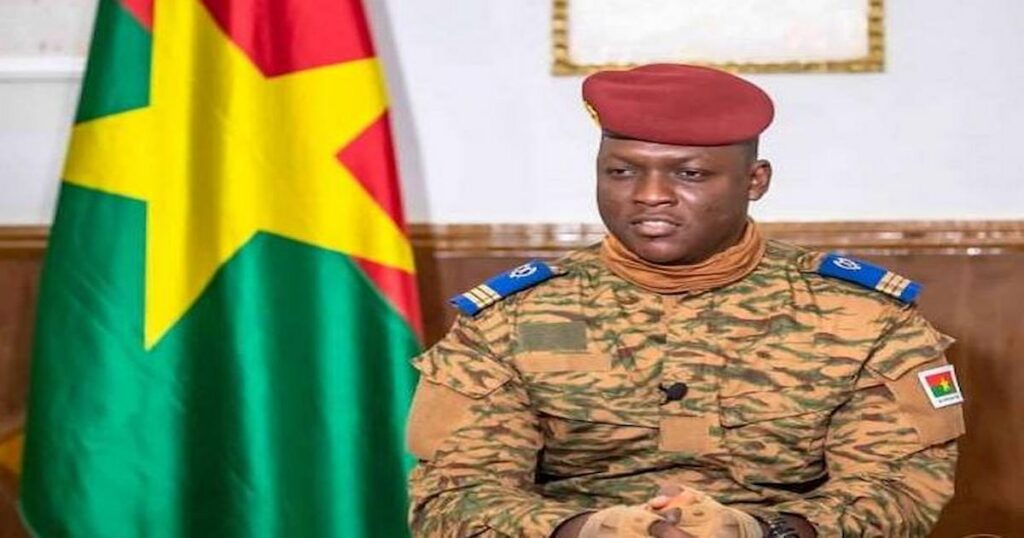
Since seizing power in a September 2022 coup, Captain Ibrahim Traoré has transformed Burkina Faso into a crucible of anti-imperialist resistance, challenging Western hegemony with a radical agenda inspired by the revolutionary legacy of Thomas Sankara.
At just 34 years old, Traoré has expelled French troops, Western corporations, and media outlets, while forging alliances with Russia, Cuba, and Venezuela.
His vision of pan-African unity, national self-reliance, and food sovereignty, embodied in the nationalisation of gold mines and ambitious agricultural initiatives, has galvanised supporters across Africa and the diaspora.
Yet, his government faces formidable challenges: an Islamist insurgency controlling 40% of the country, a foiled foreign-backed coup attempt in April 2025, and accusations of corruption from the U.S. and Western organisations.
Traoré’s decision to postpone promised elections, prioritise security, and welcome Russian military advisors has drawn Western ire, raising fears of further coups or assassination attempts.
While his popularity endures, the question remains whether Traoré can deliver lasting change or if his revolution risks collapsing under internal and external pressures.
Drawing on social science, historical analysis, and critical theory, this blog examines Traoré’s anti-imperialist project, philosophical underpinnings, and precarious path forward in a world shaped by Western dominance.
The Historical Context: Sankara’s Legacy and Burkina Faso’s Struggle
Burkina Faso’s history is a microcosm of the Global South’s battle against imperialist exploitation. As a former French colony, Upper Volta (renamed Burkina Faso, or “Land of Upright People,” by Sankara in 1983) endured decades of resource extraction and political manipulation.
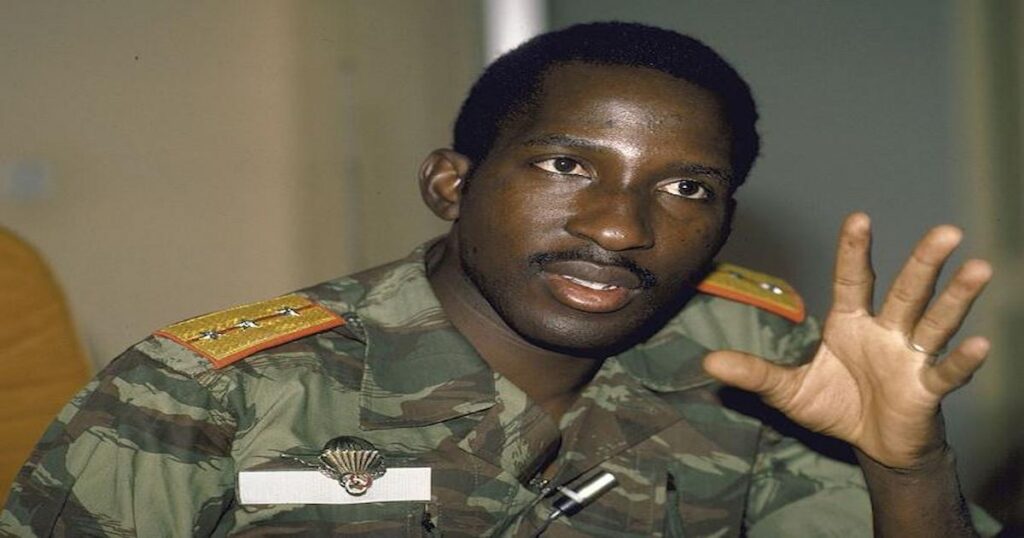
Thomas Sankara, who seized power in 1983 at age 33, became a pan-African icon by rejecting Western aid, promoting self-reliance, and challenging neocolonial structures like the CFA franc, which he called a tool of economic slavery (Sankara, 1988, p. 45).
His reforms, land redistribution, literacy campaigns, and healthcare expansion, aimed to empower the Burkinabè, but his assassination in a 1987 French-backed coup, led by Blaise Compaoré, halted this vision (Harsch, 2014, p. 132). Compaoré’s 27-year rule, aligned with France and the U.S., entrenched corruption and dependency, setting the stage for Burkina Faso’s ongoing volatility.
Traoré’s 2022 coup, deposing Lieutenant Colonel Paul-Henri Sandaogo Damiba (himself a coup leader in January 2022), was driven by frustration with Damiba’s failure to curb Islamist insurgencies and his perceived cosiness with France.
Traoré, a young captain who fought alongside militias in the north, tapped into anti-French sentiment and Sankara’s legacy, promising a “refoundation of the nation” (Geopolitical Economy Report, 2023).
His leadership reflects what Frantz Fanon described as the revolutionary’s role: to awaken a colonised people’s consciousness and dismantle imperialist structures (The Wretched of the Earth, 1961, p. 94).
Yet, Burkina Faso’s challenges, poverty, insurgency, and geopolitical pressures test the feasibility of this vision.
Traoré’s Anti-Imperialist Agenda: A Sankara Revival
Traoré’s policies are a direct homage to Sankara, blending anti-imperialism with practical reforms.
His expulsion of French troops in February 2023, following Mali and Niger’s lead, marked a seismic shift in West Africa’s geopolitical landscape. Declaring France an “imperialist state,” Traoré terminated a 2018 defence agreement, ending a decade-long French counterinsurgency presence that failed to curb jihadist violence (MintPress News, 2025).
He also expelled the French ambassador and Western media outlets, accusing them of destabilising narratives.
These moves align with Kwame Nkrumah’s critique of neocolonialism, which perpetuates control through military and cultural dominance (Neo-Colonialism, 1965, p. 239).
Traoré’s economic reforms target self-reliance. Nationalising gold mines, previously controlled by London-based firms, and building a state-of-the-art gold refinery have boosted local processing, reducing reliance on raw material exports (CPMK, 2025).
Creating a state bank backed by gold reserves challenges the CFA franc’s stranglehold, which Traoré, like Sankara, calls a mechanism of “slavery” (MintPress News, 2025).
Agricultural initiatives, such as the 2023-2025 Fishing and Agropastoral Offensive, a $981 million plan to boost rice, maize, and poultry production, aim for food sovereignty, echoing Sankara’s dictum: “He who feeds you controls you” (OffGuardian, 2025).
By distributing 400 tractors and 200 tillers, and establishing tomato and cotton processing plants, Traoré has increased cereal harvests to nearly six million tons in 2024, reducing import dependency (Black Agenda Report, 2025).
His foreign policy emphasises pan-African unity and solidarity with the Global South. Burkina Faso’s exit from the Western-backed ECOWAS and formation of the Alliance of Sahel States with Mali and Niger signal a rejection of regional structures tied to imperialist interests (MintPress News, 2025).
Alliances with Russia, Cuba, and Venezuela, nations with histories of resisting Western hegemony, reflect Traoré’s ideological kinship with Sankara, who met Fidel Castro and Daniel Ortega in the 1980s (Geopolitical Economy Report, 2023).
Traoré’s fiery speech at the 2023 Russia-Africa Summit, where he denounced Western interference and quoted Che Guevara’s “Homeland or death, we will prevail,” cemented his global anti-imperialist stature (MR Online, 2023).
Philosophical Underpinnings: Ubuntu and Revolutionary Humanism
Traoré’s agenda is philosophically grounded in African humanism, particularly ubuntu, which emphasises interconnectedness and communal responsibility.
John S. Mbiti’s relational ontology “I am because we are” (African Religions and Philosophy, 1969, p. 108) underpins Traoré’s focus on collective sovereignty over Western individualism.
His reforms, from healthcare expansion to youth employment, reflect the ethic of ubuntu’s mutual care, contrasting with neoliberal capitalism’s commodification of human needs.
Sankara’s Marxist-inflected humanism, which prioritised the dignity of the “upright people,” is evident in Traoré’s appointment of Apollinaire Joachim Kyélem de Tambèla, a Sankarist, as prime minister (Geopolitical Economy Report, 2023).
Yet, Traoré’s revolution faces philosophical tensions. Fanon warned that revolutionary zeal risks devolving into authoritarianism without democratic institutions (Fanon, 1961, p. 122).
Traoré’s postponement of elections, promised for July 2024 under an ECOWAS agreement, prioritises security over democratic transition, raising concerns about consolidating power (ISS Africa, 2024).
This echoes Hannah Arendt’s caution in On Revolution (1963) that revolutions must institutionalise freedom to avoid tyranny (Arendt, 1963, p. 89).
Traoré’s reliance on military rhetoric and Russian advisors further complicates his humanist vision, as external alliances may undermine the sovereignty he champions.
Challenges: Insurgency, Western Ire, and Internal Stability
The Islamist insurgency, controlling 40% of Burkina Faso, is Traoré’s most pressing challenge.
Groups like Jama’at Nusrat al-Islam wal Muslimeen (JNIM) and Islamic State in the Greater Sahara (ISGS) have intensified attacks since 2022, with civilian deaths rising from 721 in 2022 to 1,151 in 2024 (The Conversation, 2025).
Traoré’s massive recruitment of Volunteers for the Defence of the Fatherland (VDP) and intensified military operations have failed to reclaim territory, and reports of military atrocities, including civilian massacres, tarnish his legitimacy (AP News, 2025).
The 2024 Barsalogho massacre, where hundreds died following Traoré’s call to dig trenches, underscores the insurgency’s toll and his government’s missteps (The Conversation, 2025).
Western opposition amplifies these challenges. Stung by Traoré’s expulsion of their forces and corporations, the U.S. and France have escalated criticism. In April 2025, U.S. Africa Command’s
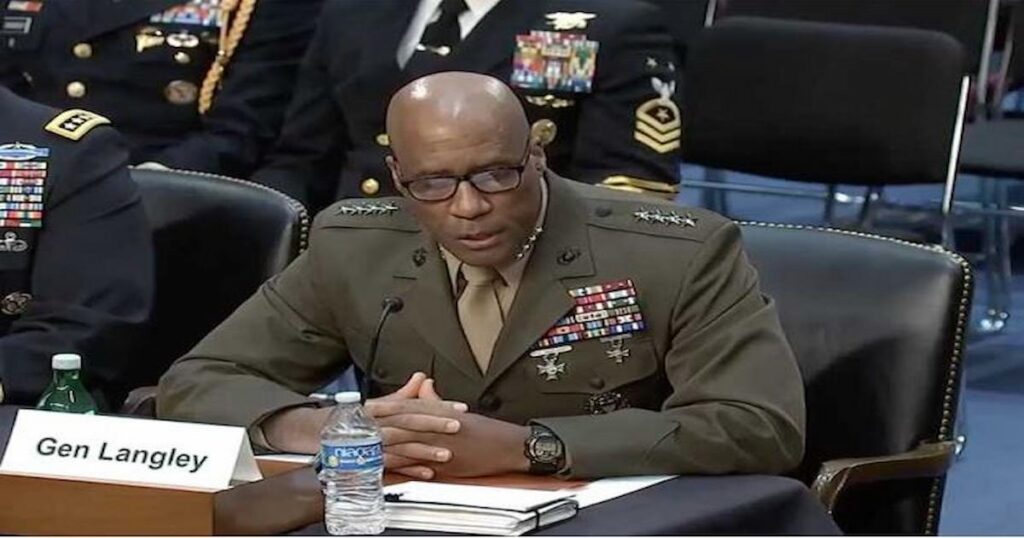
General Michael Langley accused Traoré of corruption, alleging he used nationalised gold reserves for personal security (MintPress News, 2025).
This followed a foiled coup attempt on April 16, 2025, which Security Minister Mahamadou Sana claimed was orchestrated by plotters in Ivory Coast, a U.S.-backed neighbour (BBC News, 2025).
Langley’s meetings with Ivorian officials and the U.S. Embassy’s travel warning on the coup’s day suggest Western involvement, echoing the French-backed assassination of Sankara (Black Agenda Report, 2025). Posts on X reflect African and diaspora outrage, framing Traoré as a target for defying imperialism (X, 2025).
Traoré’s alignment with Russia, including welcoming military advisors and attending Moscow’s Victory Day Parade in May 2025, has heightened Western fears of losing influence (MintPress News, 2025).
Yet, Russia’s limited presence of 100-300 advisors focuses on regime security, not counterinsurgency, raising doubts about its efficacy (The Conversation, 2025). The West’s weakened position, with France’s reduced regional clout and U.S. focus on China, limits direct intervention, but covert actions like coups or assassinations remain threats, as Sankara’s fate illustrates (ZNetwork, 2025).
Internally, Traoré’s popularity, fueled by his anti-imperialist stance and tangible reforms, is tempered by governance challenges. His anti-corruption efforts, including the arrest of former minister Vincent Dabilgou, signal progress, but slow institutional reforms and censorship raise concerns (ISS Africa, 2024).
The humanitarian crisis demands resources, with two million displaced and 6.5 million needing aid. Traoré’s government struggles to mobilise (AP News, 2025).
Critical Analysis: Promise and Peril
Traoré’s revolution embodies the Global South’s yearning for sovereignty, resonating with Nkrumah’s call for a united, anti-imperialist Africa (Nkrumah, 1965, p. 102).
His reforms, including gold nationalisation, agricultural mechanisation, and healthcare expansion, challenge the West’s exploitative model, where Africa’s resources enrich foreign corporations.
The Alliance of Sahel States, by rejecting ECOWAS, reimagines regional cooperation free from Western strings, aligning with ubuntu’s communal ethos (Mbiti, 1969, p. 108). Traoré’s solidarity with Cuba and Venezuela reflects a broader anti-imperialist alliance, reviving Sankara’s vision of global resistance (Geopolitical Economy Report, 2023).
Yet, the insurgency’s persistence undermines his legitimacy. The African Centre for Strategic Studies reports a tripling of militant deaths since 2022, with 60% of Burkina Faso outside government control (ISS Africa, 2024).
Traoré’s military focus, including Russian advisors, risks entrenching a security state, contradicting Ubuntu’s emphasis on human dignity. His election postponement, justified by insecurity, echoes Fanon’s warning that revolutionary leaders can become oppressors if they prioritise power over participation (Fanon, 1961, p. 122).
Western criticism, while hypocritical given their role in destabilising the Sahel, highlights real governance flaws. Langley’s corruption charges, though likely propaganda, exploit Traoré’s secrecy around alliances and resource allocation (Black Agenda Report, 2025).
The foiled coup attempt, linked to Ivory Coast, underscores the West’s willingness to destabilise defiant leaders, as seen in Sankara’s assassination (CPMK, 2025). Traoré’s survival depends on balancing popular support with institutional reforms, a task Sankara failed to complete.
Conclusion
Ibrahim Traoré’s anti-imperialist revolution is a bold attempt to reclaim Burkina Faso’s sovereignty, drawing on Sankara’s legacy to challenge Western domination.
His expulsion of French forces, nationalisation of resources, and alliances with Russia and the Global South signal a new era of pan-African resistance. Yet, the Islamist insurgency, Western hostility, and governance challenges threaten his vision.
Philosophically, Traoré’s ubuntu-inspired humanism clashes with the pragmatic demands of security and stability, risking authoritarian drift.
The West’s fear of Traoré, evident in coup attempts and smear campaigns, reflects its broader anxiety about an Africa that rejects its control.
Whether Traoré can deliver lasting change remains uncertain, but his defiance offers hope for a decolonised future. As Fanon reminds us, revolutions are not won by rhetoric alone but by transforming systems and empowering the people (Fanon, 1961, p. 36). Traoré must walk this path, or risk becoming another martyr like Sankara.
Leave a Reply