Contents
- 1 A powerful critique of imperial legitimacy and its myths, exposing the truth behind the empire’s image.
- 2 I. Empire as Moral Performance
- 3 II. The Architecture of Legitimacy
- 4 III. The Image of Empire and the Mirror of Resistance
- 5 IV. The Postcolonial Afterlife of Imperial Legitimacy
- 6 V. Lessons for the Present: Empire’s Echoes
A powerful critique of imperial legitimacy and its myths, exposing the truth behind the empire’s image.
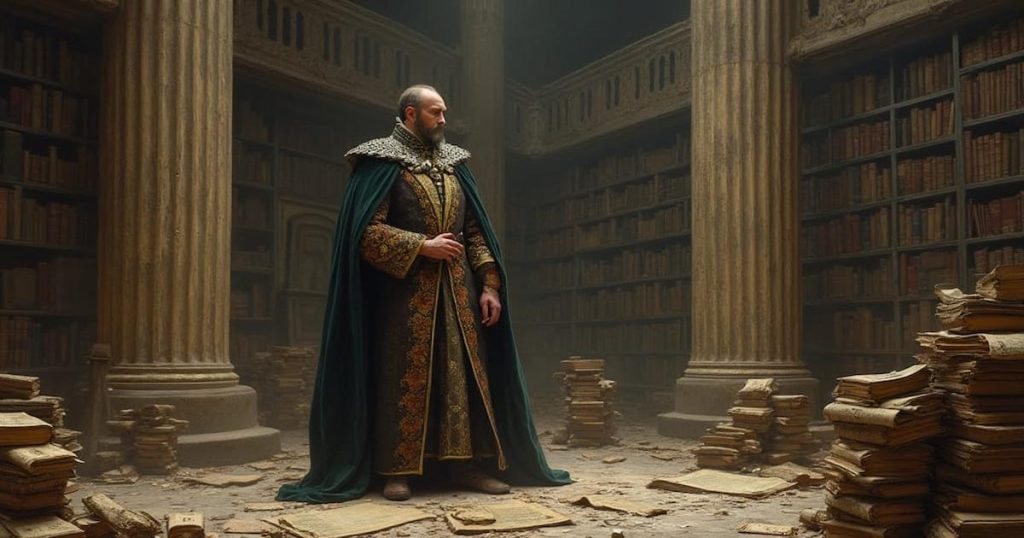
Introduction: The Empire’s Mirror Is Cracked
Empires do not fall from the sky fully formed. They are conjured into being by force, by deceit, and, most crucially, by narrative. Every empire is haunted by an original sin: that power was seized, not granted. And so the empire begins not only with conquest but with a struggle to appear righteous in the eyes of history.
This is the true meaning of the phrase “the struggle for legitimacy and the image of empire.”
Legitimacy is not synonymous with legality. It is deeper and more elusive; it is the moral authority a system claims to justify its existence.
No empire, no matter how brutal, can rule for long without constructing an image of itself as just, benevolent, and necessary.
From Rome to Britain, from the French Empire to the American hegemon, the same pattern repeats: military domination is cloaked in moral language, plunder is rebranded as development, and resistance is labelled as terrorism or backwardness.
The African student will have studied the empires that came to them bearing flags and guns, Bibles and treaties. They have read their letters, examined their maps, and listened to the stories they left behind.
What we find most revealing is not what they did, though that was often savage, but what they told themselves and others to make it all seem acceptable. That is where the struggle for legitimacy lies. And it is there that we must begin.
I. Empire as Moral Performance
An empire must persuade before it can conquer. Its soldiers may subdue territory, but its ideologues must subdue the conscience. This is why empires always produce elaborate myths of justification.
They tell us:
“We are bringing civilisation to the uncivilised.”
“We are spreading progress, law, and reason.”
“We are protecting the world from itself.”
“We are chosen.”
These are not simply lies, they are moral performances, repeated until they become cultural instinct.
Such narratives are crafted for both domestic and foreign audiences.
At home, they reassure the public that their nation is doing well. Abroad, they attempt to pacify the colonised by offering the illusion of inclusion or destiny.
Take the British Empire, for example. Its claim to legitimacy was often grounded in the idea of the “civilising mission.”
Colonial officials, Christian missionaries, and liberal politicians painted themselves as torchbearers of enlightenment. But when you strip away the rhetoric, you find economic exploitation, racial hierarchy, and a brutal disregard for indigenous sovereignty.
Still, the performance was powerful. Even today, many in Britain believe their empire was more humane than others, a myth that only persists because the image was carefully managed.
II. The Architecture of Legitimacy
The struggle for legitimacy unfolds across several key domains:
1. Language
Language is the first battlefield. Empires rename the land, redefine the people, and rewrite the past. Words such as “protectorate,” “territory,” “mandate,” and “commonwealth” are designed to mask domination.
The coloniser is never a thief; he is a steward. The colony is never a prison; it is a project.
In Africa, Europeans spoke of “tribes” to atomise political identities and prevent pan-African unity.
They used terms like “hut tax” and “native reserve” to make economic extraction sound administrative rather than coercive. The language of empire is never neutral; it is a tool of control.
2. Law
Empires codify their legitimacy through laws that legalise their theft. The British used treaties to strip African kings of land and authority, often under duress or misrepresentation.
These documents, written in European languages and enforced by imperial courts, were cited as proof of legal sovereignty.
But law without justice is tyranny in robes. Empire’s legal systems were designed not to protect the colonised, but to discipline them.
African resistance was criminalised. European violence was legalised. The struggle for legitimacy often wore a lawyer’s wig.
3. Religion
Christian missionaries played a complex role in empire-building. While some opposed colonial abuses, many worked hand in hand with imperial administrators. Conversion was seen not just as spiritual salvation, but as cultural conquest.
In many parts of Africa, conversion to Christianity was equated with submission to imperial rule. Indigenous religions were demonised.
Temples and shrines were destroyed. The image of empire became entwined with the cross, and this allowed colonisers to cloak material domination in divine authority.
4. Education
Colonial education was a factory for the empire’s image. It taught colonised children European history, values, and languages while erasing their own.
The goal was to create a class of intermediaries who could serve the empire while believing in its superiority.
The African elite who were educated in mission schools or in Europe often became ambassadors of imperial ideology. They were taught that loyalty to the crown was nobility, and that their ancestors were savages. It was not simply their bodies that were colonised, but their minds.
III. The Image of Empire and the Mirror of Resistance
Despite these efforts, no empire rules unchallenged. The struggle for legitimacy is not a one-sided affair. For every myth the empire creates, the colonised respond with counter-narratives.
In Africa, griots and oral historians preserved the memory of precolonial greatness.
Poets and rebels exposed the violence behind the imperial mask. Freedom fighters redefined the empire’s image not as a benevolent guardian, but as a predator.
The image of empire is never stable. It is always contested.
Consider how empires reacted to rebellion:
In India (1857), the British called the uprising a “mutiny” rather than a war for independence.
In Kenya (1952), the Mau Mau were labelled terrorists, though they were fighting for land and dignity.
In Algeria (1954–1962), the French waged a war of torture and repression, all while claiming to be defending civilisation.
In each case, the empire’s image cracked under the weight of its contradictions. The colonised held up a mirror and the empire flinched.
IV. The Postcolonial Afterlife of Imperial Legitimacy
The struggle for legitimacy does not end with decolonisation. Many former empires continue to defend their historical image, fearing that to admit guilt is to forfeit moral identity.
We see this in debates over statues, museums, and school curricula. When African nations demand the return of stolen artefacts, European institutions argue for “shared heritage.” When students protest the glorification of colonisers, governments speak of “contextualization.”
These are not neutral gestures. They are part of the empire’s continued campaign to preserve its image.
But history is not a painting to be cleaned and framed; it is a battlefield of meaning.
In the Global South, intellectuals are reclaiming the narrative. Writers like Chinua Achebe, Ngũgĩ wa Thiong’o, and Frantz Fanon have deconstructed imperial myths and offered new frameworks for understanding the colonial encounter. The goal is not revenge, but truth.
Because without truth, there can be no justice. And without justice, legitimacy remains a lie.
V. Lessons for the Present: Empire’s Echoes
Why does this matter today? Because the logics of empire persist.
Modern imperialism does not always march with flags. It comes in the form of structural adjustment, drone strikes, extractive trade agreements, and the conditionality of aid.
It wears the suits of diplomats, the robes of economists, the gowns of university fellows.
And it still relies on the image.
Today’s empires speak of “humanitarian intervention,” “peacekeeping missions,” and “rules-based orders.”
They bomb in the name of democracy. They sanction in the name of human rights. They fund coups in the name of stability.
The struggle for legitimacy remains alive.
It is our duty as scholars, citizens, and inheritors of wounded histories to interrogate every claim to moral authority.
To ask not only who rules, but how, and why. To demand that images reflect reality, not disguise it.
Conclusion: Shattering the Mask, Reclaiming the Truth
The image of empire is a mask made of gold leaf and blood. It dazzles from a distance, but up close it is cracked, fragile, and false.
The struggle for legitimacy is the struggle to keep that mask intact. But history, like fire, burns away illusion.
Let us not be fooled.
An empire that must lie to live is already dying. An empire that fears memory is already lost. Let us speak the truths it tried to bury.
Let us tell the stories it tried to silence. And let us remember that legitimacy cannot be granted from above, it must rise from below, from the people, from justice, from freedom.
Only then will we bury the empire, not in marble and myth, but in the clear light of history.
Leave a Reply